- 1 Years of Survival: Over 5 Years
- 2 Authentic K-Level: 4/5
- 3 Note: Takeout Only (No Dine-in)
- 4 Ordering Difficulty: Medium
- 5 Ordering Tip (Simple Phrases for Ordering):
- 6 Ordering Tip (The Must-Tries): Kimchi Mandu & Steamed Buns (Jjinppang)
- 7 Getting There: Subway
- 8 Insider’s Tip:
- 9 Mandu’s Myth: The Story of Zhuge Liang and the Sacrificial Dough
- 10 Personal Experience:
Years of Survival: Over 5 Years
I started working here as a part-timer in the fall of 2021. The shop was already well-established back then, though I’m not exactly sure of the specific year it opened.
Authentic K-Level: 4/5
While dumplings originally came from China, 64 Kim Mandu has beautifully reinterpreted them into a uniquely Korean style.
Note: Takeout Only (No Dine-in)
Please be aware that there is no seating area inside this shop.
It is strictly for takeout only.
Ordering Difficulty: Medium
The menu is straightforward, so you can easily order with just a few gestures. There are no complicated sub-options to worry about.
Ordering Tip (Simple Phrases for Ordering):
- For 4 people & wanting Steamed Buns: Ask for the “Family Set” (Gajok-set).
- For 4 people & wanting Shrimp Dumplings instead: Ask for the “64 Set”.
- Note: “Wang-mandu” (King Dumplings) and “Tong-mandu” (Whole Dumplings) share the same ingredients; only the size is different.
Ordering Tip (The Must-Tries): Kimchi Mandu & Steamed Buns (Jjinppang)
While you can find flavors similar to meat or shrimp dumplings in China or Japan, Kimchi Mandu is a unique experience you can only find in Korea. And the Steamed Buns? Eating them in the freezing winter is pure happiness! Taking a bite of that chewy dough and warm, sweet red bean paste while blowing on it in the cold air is more than just a meal—it’s a sensory experience. To truly appreciate 100% of its flavor, you must eat it outside in the cold.
Getting There: Subway
It takes less than 5 minutes on foot from Seokchon Gobun Station, Exit 4.
Insider’s Tip:
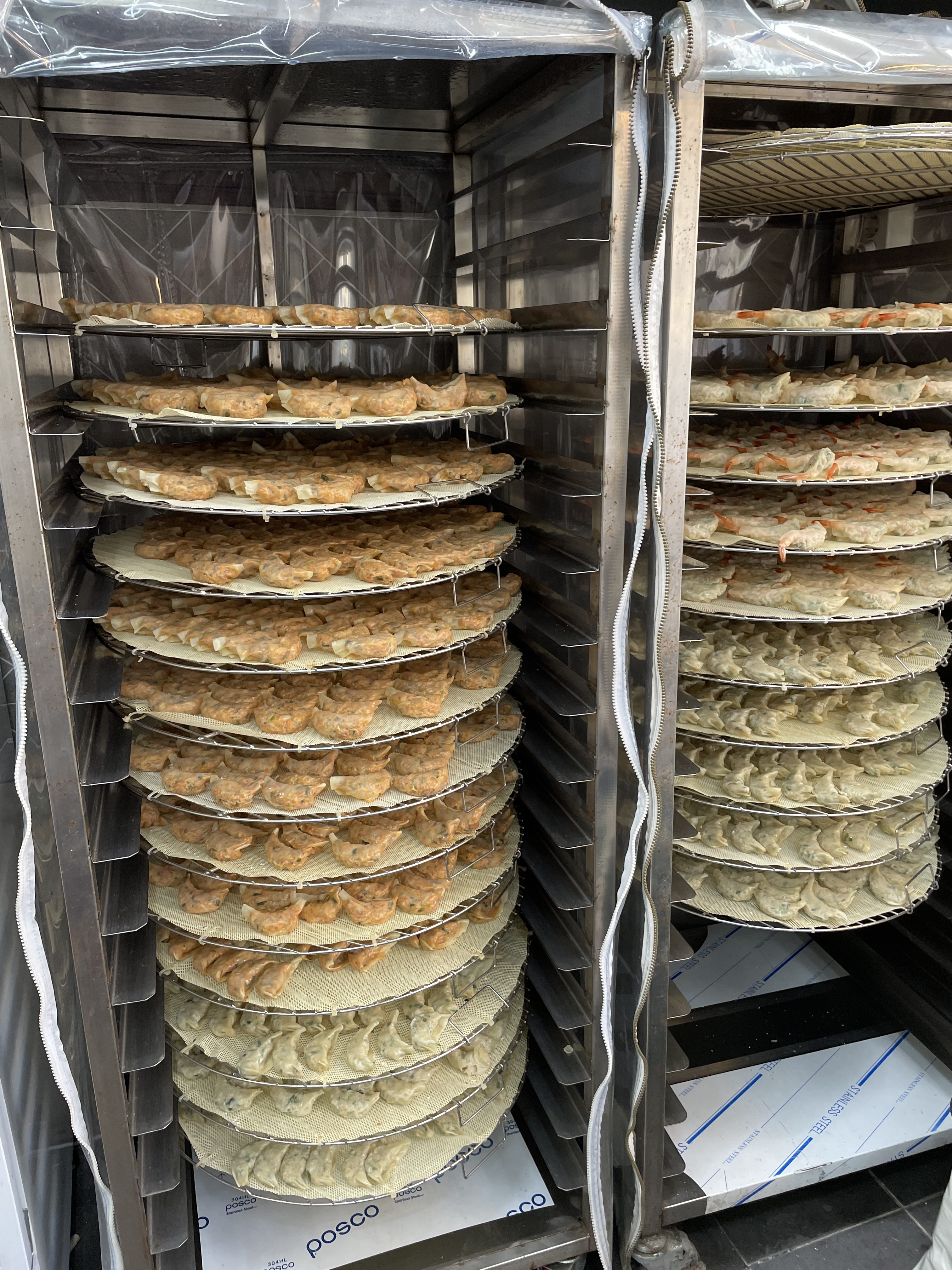
The master starts making the dumplings every morning before 9:00 AM. The shop opens at 9:00 AM, but they usually sell the stock from the previous day first. If you want to taste the freshest, just-made dumplings and buns, I highly recommend visiting after 10:00 AM.
Mandu’s Myth: The Story of Zhuge Liang and the Sacrificial Dough
One of the most famous legends regarding the origin of Mandu traces back to the legendary Chinese strategist, Zhuge Liang (also known as Kongming). According to the classic novel Romance of the Three Kingdoms, he created these meat-filled dough pockets as a clever substitute for human heads, which were traditionally required for a sacrificial ritual to calm a turbulent river. While this dramatic scene in the novel has made the story iconic, it remains unclear whether this tale is historically accurate or simply a fascinating piece of folklore.
Personal Experience:
The “Siljang-nim” (Master) who crafts the dumplings has a bit of a prickly personality, but his skill is the absolute best I’ve ever seen. You can feel his professionalism from his consistently clean hands and neatly groomed head (he’s actually bald). He doesn’t even smoke, believing that someone who prepares food must keep their hands pristine. While many part-timers struggled with his grumpy nature, he always made sure to buy a meal for those who worked hard. I worked here for about six months, and when I left, he told me, “You’ll do well wherever you go.” I still carry those words with gratitude.




Leave a Reply